



Distinguishing Freight Lifts from Passenger Elevators: Understanding the Difference to Choose the Right Equipment
In production facilities, warehouses, or high-rise buildings, moving goods and people requires safe, convenient lifting equipment. However, many people often confuse freight lifts with passenger elevators. These two types differ completely in structure, operating principles, and intended use. The following article will help you clearly distinguish freight lifts from passenger elevators, so you can choose the right type for your actual needs.
1. Basic Concepts
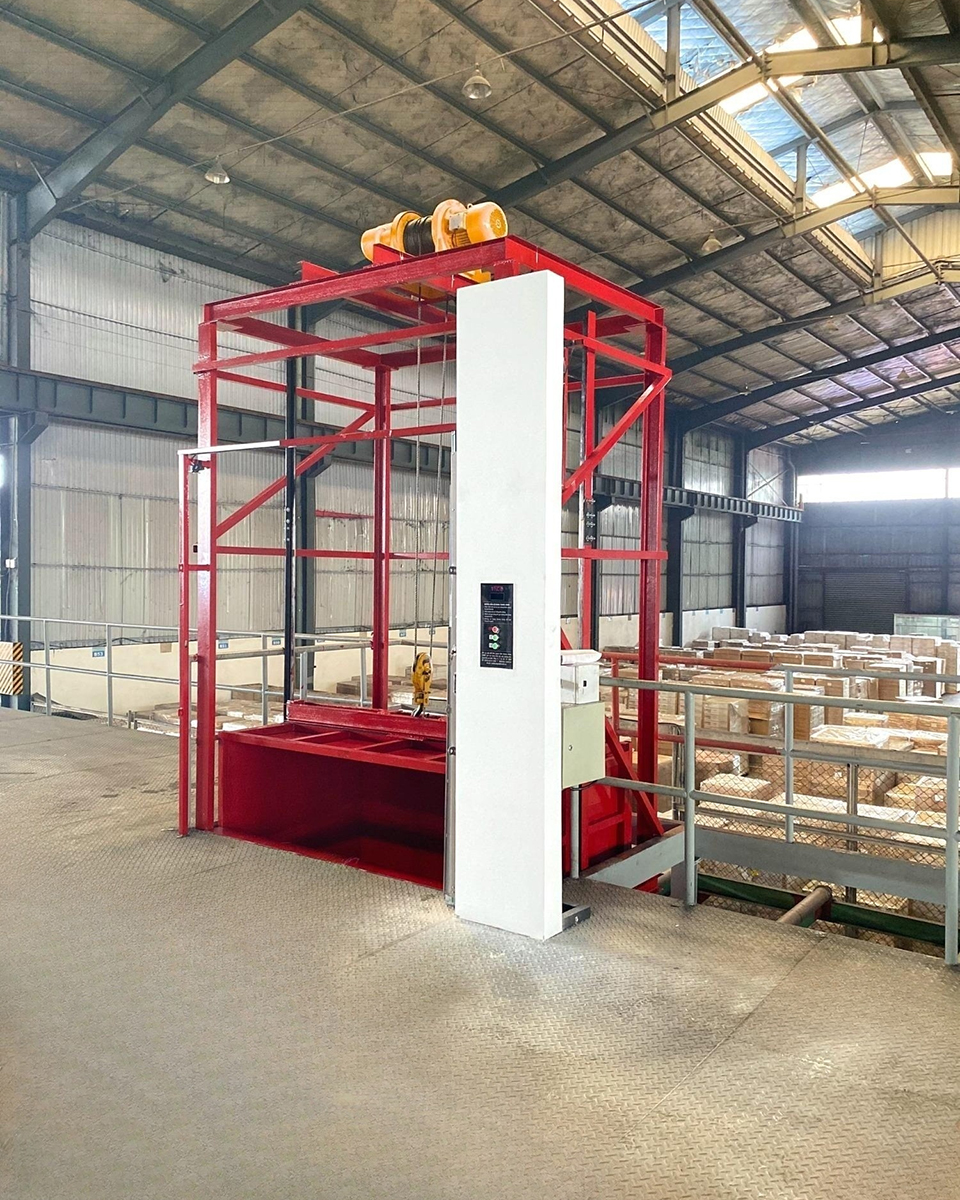
A freight lift is equipment used to transport goods, materials, and products between floors in workshops, warehouses, factories, or construction sites. Its design prioritizes load capacity and durability and does not include safety features intended for people.
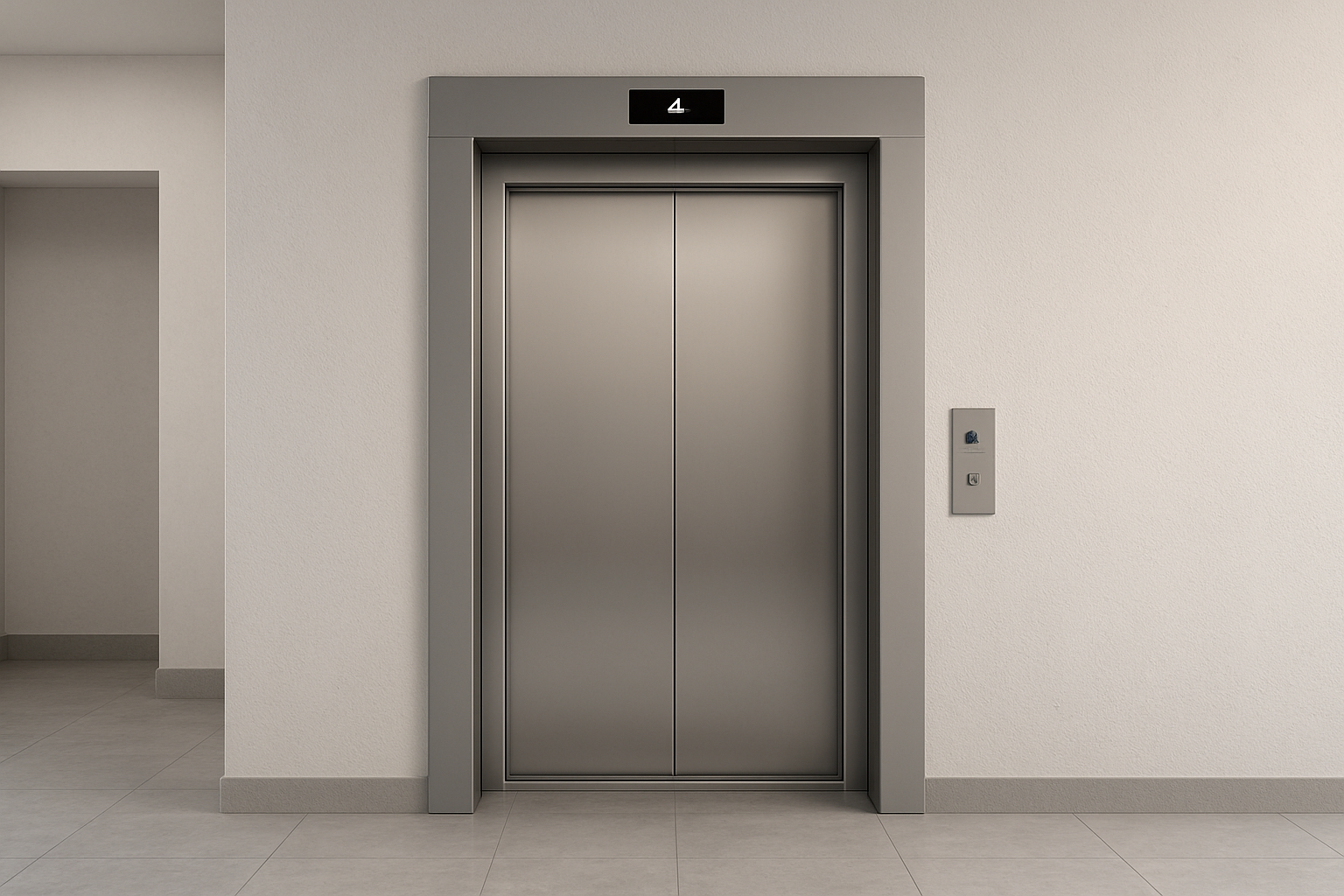
A passenger elevator is equipment used to transport passengers. It is designed to ensure absolute safety, smooth operation, and high aesthetics, and is commonly used in homes, apartment buildings, offices, or shopping centers.
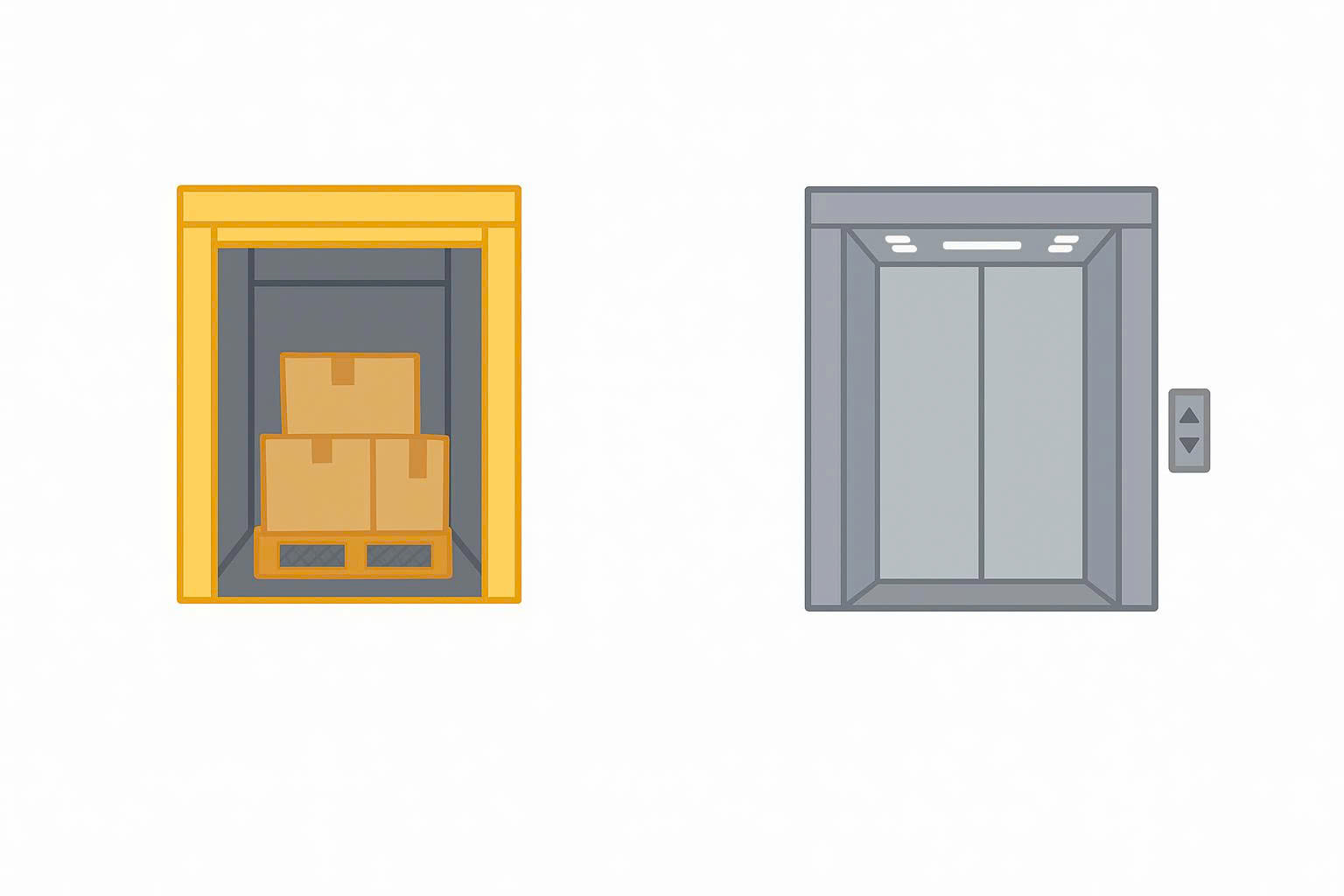
2. Detailed Comparison Table
|
Criteria |
Freight Lift |
Passenger Elevator |
|
Purpose of Use |
Transporting goods and materials |
Transporting people |
|
Common Load Capacity |
100 kg – 5,000 kg |
250 kg – 1,000 kg |
|
Travel Speed |
Low (3–10 m/min) |
High (30–90 m/min) |
|
Cabin Structure |
Usually made of steel, without interior finishing |
Includes interior finishing, automatic doors, lighting, and ventilation |
|
Safety Features |
Only requires a load fall-prevention system and floor locks |
Includes door sensors, anti-pinch protection, and an automatic rescue system |
|
Installation Location |
Warehouses, workshops, production areas |
Homes, apartment buildings, offices |
|
Investment Cost |
Low and easy to install |
Higher, with strict standard requirements |
|
Inspection Requirements |
According to industrial lifting equipment standards |
According to passenger elevator standards |
3. Safety
Freight lifts do not have enclosed cabins or protective sensors, so they must absolutely not be used to carry people.
Passenger elevators are equipped with braking systems, door sensors, automatic rescue devices in case of power failure, and many features to ensure life safety.
4. Practical Applications
Freight lifts: Used in workshops, warehouses, supermarkets, industrial kitchens, and production facilities to move goods quickly and reduce manual labor.
Passenger elevators: Installed in high-rise buildings, villas, hotels, and hospitals to provide convenient movement and improve the user experience.
5. Notes When Choosing
When designing a transport system for a building or facility, you should clearly identify the main purpose of use:
If you only need to transport goods and materials, you should choose an industrial freight lift to save costs and make maintenance easier.
If it is used to carry people or to carry both goods and people, a passenger elevator or a food lift with an enclosed cabin must be used to ensure safety in accordance with regulations.
6. Conclusion
Freight lifts and passenger elevators have clear differences in structure, function, and safety standards. Understanding and choosing the right type of lift not only helps save investment costs but also ensures safety during operation.
main.comment_read_more